
Understanding Nerve Root Blocks
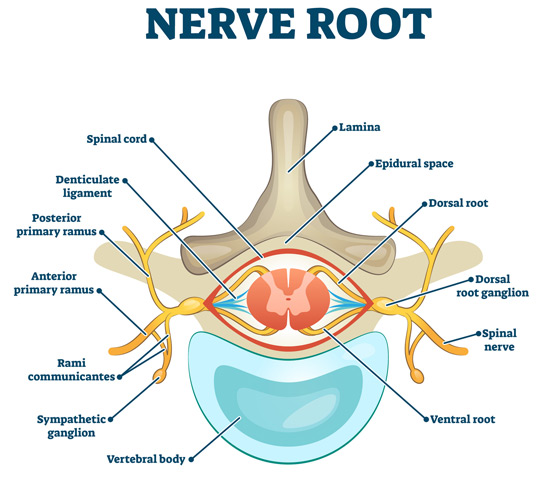
A nerve root block is a minimally invasive injection designed to ease pain that originates from an irritated or compressed spinal nerve. By placing local anesthetic and steroid medication directly at the point where the nerve exits the spine, the procedure can calm inflammation, reduce pain, and help patients move more comfortably. In some cases, a nerve root block is performed to provide temporary relief; in others, it is used diagnostically to confirm the exact source of pain and determine whether surgery or another treatment may be beneficial.
How Nerve Root Blocks Work

When a spinal nerve becomes compressed or irritated, it can cause pain that radiates through the back, neck, arms, or legs. A nerve root block targets this area with medication to reduce inflammation and interrupt pain signals. The injection is performed under X-ray guidance to ensure precision and can help provide clarity for both diagnosis and treatment planning.
Nerve root blocks may help calm a nerve that has been in a state of constant irritation, allowing it time to heal. They also help physicians identify whether a specific nerve is responsible for symptoms, which is especially useful when planning next steps such as physical therapy, additional injections, or potential surgery.

Preparing for and Undergoing Treatment
Certain patients may need specific preparation before the procedure. Individuals with diabetes are often advised to delay their medication until after the injection. Those who take blood thinners may need to stop them in advance to lower the risk of bleeding. Patients with allergies to contrast dye or shellfish should notify their provider before scheduling treatment.
During the procedure, patients lie on their stomach in an X-ray suite. A small amount of IV medication helps them relax while the injection site is cleaned. Using live X-ray imaging, the physician carefully positions the needle and delivers the anesthetic and steroid medication around the affected nerve. Patients may feel brief stinging from the numbing medicine, but discomfort typically lasts only a few seconds.
Benefits and Conditions Treated
A nerve root block can relieve symptoms caused by compressed or inflamed spinal nerves in the neck or back. Pain may lessen immediately from the anesthetic, while steroid medication provides longer-lasting relief as inflammation decreases over the following days. Because each patient’s response may differ, some individuals may require additional injections to achieve sustained improvement. Tracking pain levels after each procedure helps guide decisions about future care.
Aftercare, Risks, and Long-Term Management
The procedure carries a low risk of side effects, including bleeding, infection, allergic reaction, or temporary nerve irritation. Some patients experience numbness or weakness along the path of the treated nerve for a short time. Local soreness at the injection site is common and can usually be managed with ice.
Patients should avoid applying heat to the area for 24 hours and refrain from baths, hot tubs, or heated therapy during this time. Pain medication may be taken as needed. Monitoring how much relief the injection provides—and how long it lasts—helps the physician determine whether additional nerve blocks or other treatments may be appropriate.